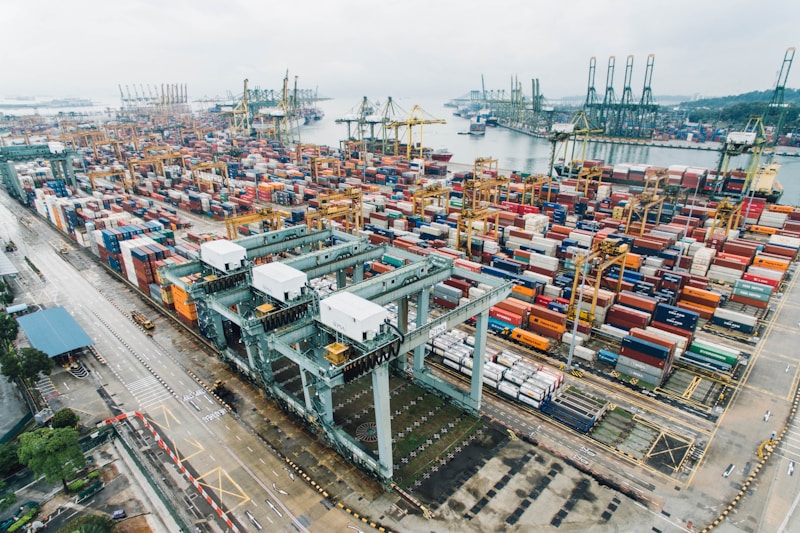
Sea freight is the backbone of international trade. Approximately 90% of world trade is carried by sea. In this article, we will examine FCL and LCL, the two basic methods of container transport, in detail.
Container Transport Overview
What is a Container?
Containers are reusable metal boxes manufactured in standard sizes. The most common container types in international transport:
20’ (TEU - Twenty-foot Equivalent Unit)
- Internal dimensions: 5.9m x 2.35m x 2.39m
- Volume: ~33 m³
- Maximum load: ~28 tons
40’ (FEU - Forty-foot Equivalent Unit)
- Internal dimensions: 12.03m x 2.35m x 2.39m
- Volume: ~67 m³
- Maximum load: ~26 tons
40’ High Cube (HC)
- Internal dimensions: 12.03m x 2.35m x 2.69m
- Volume: ~76 m³
- For high-volume cargo
Special Container Types
- Reefer (Refrigerated): Temperature-controlled products
- Open Top: Cargo requiring top loading
- Flat Rack: Large machinery and equipment
- Tank Container: Liquid cargo
What is FCL (Full Container Load)?
FCL means “Full Container Load”. It is completely filled by a single shipper and sent to a single consignee.
FCL Advantages
1. Security
- Container remains sealed
- No contact with other cargo
- Minimal damage risk
- Low theft risk
2. Speed
- Direct route
- No intermediate terminal operations
- Shorter transit time
- Predictable delivery
3. Cost Efficiency (For Large Loads)
- Lower cost per unit
- Fixed freight charge
- No additional handling costs
4. Flexibility
- Loading plan freedom
- No special packaging requirement
- Stackable arrangement
FCL Disadvantages
- Minimum load requirement
- Empty space cost
- High initial investment
- Storage need
When to Choose FCL?
- Load volume: Over 15 CBM
- Regular shipments: Weekly/monthly scheduled
- Sensitive products: Fragile or valuable goods
- Fast delivery: Time-critical orders
What is LCL (Less than Container Load)?
LCL means “Less than Container Load”. Loads from different shippers are consolidated in the same container.
LCL Advantages
1. Cost Savings (For Small Loads)
- Pay only for used space
- No minimum order obligation
- Capital efficiency
2. Flexibility
- Small quantities can be shipped
- Ideal for test orders
- Stock management convenience
3. Accessibility
- Suitable for new exporters
- Low initial cost
- Market test opportunity
LCL Disadvantages
1. Long Transit Time
- Consolidation waiting time
- Intermediate terminal operations
- Deconsolidation process
2. Damage Risk
- Multiple handling
- Contact with other cargo
- Container opening and closing
3. Cost (For Large Loads)
- High per CBM fee
- Handling charges
- Terminal fees
When to Choose LCL?
- Load volume: Between 1-15 CBM
- Sample shipment: Product introduction
- New market entry: Test orders
- Stock replenishment: Small batches
FCL vs LCL: Detailed Comparison
Cost Comparison
| Factor | FCL | LCL |
|---|---|---|
| Freight calculation | Container-based | CBM/ton-based |
| Minimum charge | 1 container | 1 CBM |
| Terminal fee | Low | High |
| Handling | Minimum | Multiple |
| Insurance | Standard | Higher |
Break-Even Point
As a general rule:
- Below 15-20 CBM: LCL generally more economical
- Above 15-20 CBM: FCL generally more economical
Example Calculation (China-Turkey):
LCL freight: ~$60-80/CBM
20' FCL freight: ~$1,500-2,000

Break-even: 1,750 / 70 = 25 CBM
Transit Time Comparison
Shanghai - Istanbul route:
- FCL: 25-30 days
- LCL: 35-45 days (including consolidation)
Hamburg - Istanbul route:
- FCL: 7-10 days
- LCL: 14-18 days
Risk Comparison
| Risk Type | FCL | LCL |
|---|---|---|
| Damage | Low | Medium-High |
| Delay | Low | Medium |
| Loss | Very low | Low |
| Contamination | None | Possible |
Getting Freight Quotes
Providing Correct Information
Prepare this information when getting freight quotes:
-
Cargo information
- Product description
- HS code
- Gross weight
- Volume (CBM)
- Number of packages
-
Route information
- Loading port
- Destination port
- Delivery address (for door delivery)
-
Timing
- Cargo ready date
- Desired delivery date
-
Special requirements
- Dangerous goods (DG)
- Temperature control
- Insurance request
Freight Components
Ocean freight:
- Ocean freight
- BAF (Bunker Adjustment Factor)
- CAF (Currency Adjustment Factor)
- Peak season surcharge
Terminal charges:
- THC (Terminal Handling Charge)
- Documentation fee
- B/L fee
Additional charges:
- Container seal fee
- VGM (Verified Gross Mass)
- Customs clearance
Insurance Matters
Types of Marine Insurance
ICC (A) - All Risks
- Most comprehensive coverage
- Covers all risks
- Mandatory for CIP deliveries
ICC (B) - Named Perils
- Specified risks
- Fire, sinking, collision
- Medium-level protection
ICC (C) - Basic
- Basic risks
- Lowest premium
- Sufficient for CIF deliveries
Insurance Recommendations
- FCL: ICC (B) or (C) may be sufficient
- LCL: ICC (A) recommended (due to multiple handling)
- Valuable cargo: ICC (A) in all cases
Conclusion
The choice between FCL and LCL depends on your cargo volume, budget, and time constraints. By making the right choice, you can achieve both cost optimization and safe delivery.
As Gökçe Trade, we provide professional support in determining the most suitable transport solution for your cargo volume and freight optimization.
Contact us for detailed information about container transport.